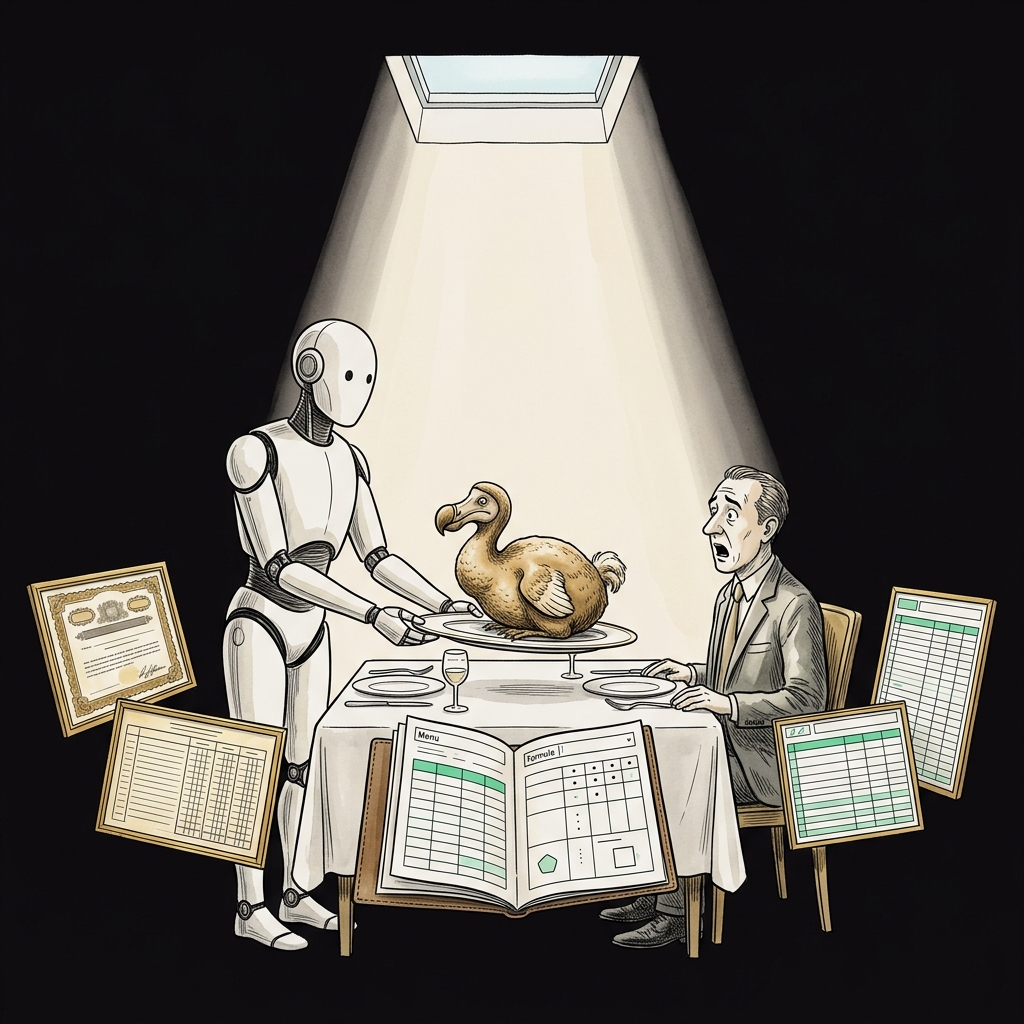
AI customer service knowledge base decay is the silent degradation of a chatbot's accuracy as the documents it retrieves from drift out of sync with the product, pricing, and policies they describe. Every UI change, refund-policy tweak, or pricing update creates a gap between what the live business does and what the help center says — and a RAG-based bot will retrieve and confidently restate the stale version. Left unmanaged, decay turns a 60% resolution rate into a hallucination engine within twelve to eighteen months.
The economics make the problem worse before they fix it. Klarna's February 2024 announcement that its OpenAI-powered assistant handled 2.3 million chats in month one, replaced the workload of 700 agents, cut resolution time from 11 minutes to under 2, and projected $40 million in annual profit improvement set off a wave of "fire the contact center" deployments. By May 2025, Klarna publicly course-corrected and began rehiring human agents for complex cases — quality on edge cases had degraded enough to dent CSAT. The takeaway is not that AI customer service failed; it's that nobody budgeted for the knowledge maintenance layer underneath it.
Why AI Customer Service Knowledge Base Decay Happens Faster Than Teams Expect
Retrieval-augmented generation (RAG) is the dominant architecture for production support bots in 2026. The bot embeds the user's question, retrieves the top-K matching documents from your knowledge base, and asks an LLM to compose an answer grounded in those passages. The architecture has one structural weakness: it treats every retrieved document as ground truth at query time, regardless of when that document was last reviewed.
That weakness compounds with four predictable decay vectors:
- Product-doc drift. Engineering ships a UI change. The help-center article still references the old button label. The bot retrieves the article and tells the customer to click a button that no longer exists.
- Policy-doc drift. Legal updates a refund window from 30 to 14 days. The chatbot answer derived from a cached policy doc still promises 30. This is the exact failure mode behind the Moffatt v. Air Canada decision in February 2024, where a British Columbia tribunal ruled Air Canada liable for negligent misrepresentation because its chatbot promised a bereavement refund that the airline's actual policy did not honor. The tribunal rejected the argument that the chatbot was a separate legal entity and ordered Air Canada to pay $812 in damages.
- Pricing-doc drift. Pricing pages change quarterly; cached pricing FAQs change annually. The bot quotes last year's number with full confidence.
- Conflicting-sources drift. The same answer lives in three places — a public help article, an internal SOP, and a macro template. They diverge over time, and the retriever picks one at random based on embedding similarity.
Independent research published on arXiv in 2024–2025 measured hallucination rates in retrieval-augmented systems at up to 33% in domain-specific deployments, with the primary failure modes being "topically relevant but factually insufficient passages" and "conflicting information across retrieved documents." The retrieval layer does not magically prevent the LLM from confabulating — it constrains the surface, but the surface itself rots.
Takeaway: Treat your knowledge base as a production data dependency, not a marketing artifact. Assign it an owner with the authority to block product launches that ship without updated docs.
The Real Cost: What Happens When Bots Answer Yesterday's Questions
The headline-grade failures get the press. DPD's chatbot, after a routine system update on January 18, 2024, was prompted by a frustrated customer named Ashley Beauchamp into writing a poem about how useless DPD was and swearing at customers — the exchange was viewed 1.1 million times on X within 24 hours, and DPD disabled the bot the same day. Air Canada's bereavement-fare ruling created the first major precedent that companies own the liability for chatbot misstatements.
But the quiet costs are larger. A 2025 Gartner buyer survey found that 63% of customer service leaders abandoned their first AI agent platform within 18 months, citing plateaued resolution rates and opaque pricing escalators. Forrester's 2025 benchmark put Zendesk AI Agents at roughly 38% deflection on standard configurations and Intercom Fin at roughly 50% resolution — but both were heavily dependent on knowledge base maturity. The same platform that hit 50% on a well-groomed KB dropped into the low 20s on a stale one.
The hidden line items every operator should model:
- Recovery cost per wrong answer. A misinformed customer requires a human agent to re-handle the ticket, often with an apology credit. Industry-side estimates from happysupport.ai and Crisp put the blended cost at 3–5x the cost of a first-touch resolution.
- Trust erosion. Once a customer gets one confidently wrong answer, they stop trusting the channel. Containment rate drops, and human agent volume creeps back up.
- Legal exposure. Post-Moffatt, the precedent is set: the chatbot's answer is the company's answer.
- CSAT volatility. Klarna's CSAT actually improved 4 points initially per its first-month press release, then degraded enough by 2025 to justify a public reversal.
Takeaway: A 50% deflection rate at 90% accuracy is more valuable than 70% deflection at 75% accuracy. Optimize for grounded answers, not containment volume.
A Step by Step Knowledge Base Maintenance Framework
The implementations that hold a 30–40% sustained cost reduction (the band reported by Chatbase, Forethought, and Crisp across 2025–2026 case studies) share one trait: a recurring maintenance ritual with named owners. Below is the operating cadence used by mature deployments.
- Tag every KB article with a freshness SLA. Tier 1 (top 20% of traffic — refund, shipping, account, login): 30-day review. Tier 2 (mid-traffic FAQs): 90-day review. Tier 3 (long tail): 180-day review. Articles past SLA get auto-flagged in the bot's retriever as "stale-warn" so the LLM is instructed to defer to a human.
- Wire product-launch checklists to the KB. No PR merge ships without a KB diff. The Jira/Linear ticket template gets a "KB updated? (Y/N + article link)" required field. This is the only intervention that prevents product-doc drift at the source.
- Run a weekly "wrong-answer mine." Sample 100 bot transcripts per week. Score each as correct, partially correct, or wrong. For every wrong answer, trace back to the retrieved document and either update it, deprecate it, or merge it. Forethought and Intercom both recommend this cadence in their 2025 customer guidance.
- De-duplicate ruthlessly. Run quarterly embedding-similarity scans across the KB. Any two articles with cosine similarity above 0.92 are merge candidates. The retriever picks one at random when duplicates exist, which is the source of the "I got a different answer yesterday" complaint.
- Add a "last verified" timestamp to every article. Show it in the retrieved context the LLM sees, and prompt the model to weight recent answers higher. This is a 20-line prompt change that visibly reduces stale-answer rate.
- Measure decay, don't just measure accuracy. Track week-over-week accuracy on a fixed 200-question regression set. A 3-point drop two weeks in a row is your decay signal — investigate before customers do.
Takeaway: Decay is not an event; it's a rate. Instrument the rate or you will keep being surprised.
The Governance Layer: Who Owns the Knowledge Base
The most common organizational failure: support owns the bot, product owns the documentation, and neither owns the connection between them. The result is that the bot "belongs" to whichever team is most visibly embarrassed by it that week.
The org designs that actually work in 2026:
- A named Knowledge Operations role. One person (or a 2–3 person pod at scale) owns the KB as a product. They sit at the seam between support, product, and legal. Klarna, after its 2025 course-correction, publicly added this function. Intercom recommends it explicitly in its Fin deployment guides.
- A "two keys" launch rule. Engineering and Knowledge Operations both sign off before a feature ships. KnowledgeOps signs only when the corresponding article is updated and indexed.
- A legal-review tier for policy articles. Refund, cancellation, warranty, privacy, accessibility — these articles get a legal sign-off on every change. The Air Canada ruling makes this a defensible cost, not an optional one.
- A weekly cross-functional review. Support agents are the first to see wrong answers. Give them a one-click "flag this answer" button that opens a ticket assigned to KnowledgeOps with the transcript attached.
Takeaway: If no single person can be fired for a stale KB, no single person will maintain it. Name the owner before you scale the bot.
An Example: Building the 90-Day Decay Audit
For teams who want to run this without a six-figure platform purchase, here is the spreadsheet model — exportable as an Excel template or free download for any operator — that we use with consulting clients. It's a four-tab workbook:
- Tab 1 — KB Inventory. Article ID, URL, owner, traffic tier, last-verified date, days-since-verified, SLA status (green/amber/red).
- Tab 2 — Wrong-Answer Log. Date, transcript ID, customer question, bot answer, correct answer, root-cause article ID, severity (1–5), recovery cost estimate.
- Tab 3 — Decay Metrics. Weekly accuracy on fixed regression set, deflection rate, escalation rate, CSAT for AI-only resolved tickets. Trended over rolling 12 weeks.
- Tab 4 — Action Plan. Top 10 articles by wrong-answer count, owner assigned, due date, status. This is the working document for the weekly review.
Run the audit on day 1, day 30, day 60, day 90. If your red-status article count is growing faster than your update velocity, you are in active decay. If your wrong-answer log is flat or shrinking while traffic grows, your maintenance ritual is working.
Conclusion
The companies that win with AI customer service in 2026 will not be the ones with the most sophisticated model — they will be the ones with the freshest, cleanest, most rigorously governed knowledge base feeding it. Klarna, Air Canada, and DPD wrote the cautionary tales. The framework above is the operating manual. Decay is inevitable; surprise is optional.
If you'd rather not build the audit workbook, KB inventory tracker, and wrong-answer log from scratch, the ModelStack AI Workflow and SOP template kits include a ready-made Excel template for exactly this — the 90-day decay audit spreadsheet model, a KnowledgeOps role description, the two-keys launch checklist, and the regression-set scoring rubric. Download once, plug in your articles, and you have the governance layer most teams take six months to build internally.
Sources
- Klarna press release: AI assistant handles two-thirds of customer service chats in its first month, February 2024
- CX Dive: Klarna reinvests in human talent for customer service after AI chatbot rollout, May 2025
- CBC News: Air Canada found liable for chatbot's bad advice on bereavement rates, February 2024
- American Bar Association: BC Tribunal confirms companies remain liable for information provided by AI chatbot, February 2024
- TIME: AI chatbot curses at customer and criticizes work company (DPD), January 2024
- Intercom blog: Intercom vs Zendesk — two AI agents put to the test, 2025
- Chatbase: AI Customer Support — what changed between 2023, 2025 and 2026
- Crisp: The true impact of AI chatbots on customer service costs, 2026 edition
Related: Browse all AI Workflow Templates on ModelStack.
Get started with a free template
Download our free Unit Economics Calculator — no signup required.