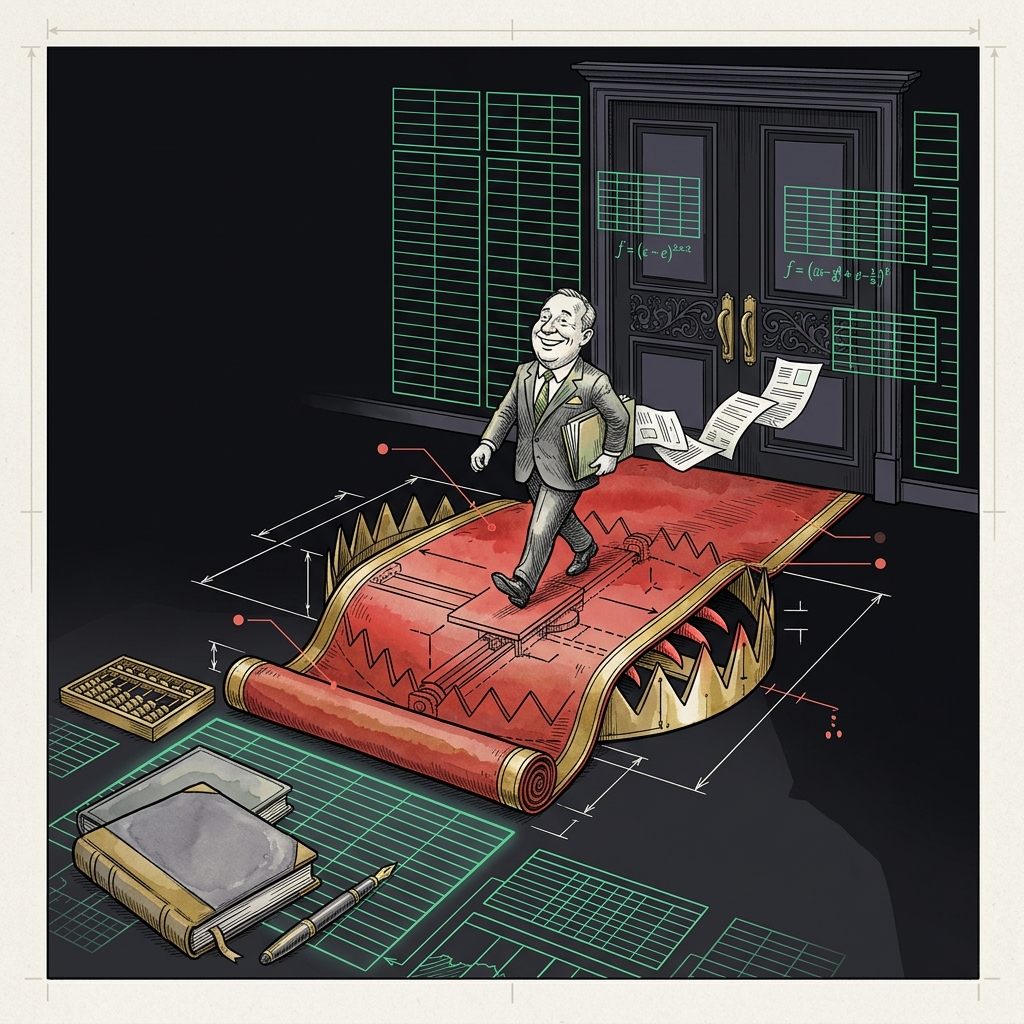
A Private Placement Memorandum (PPM) is the disclosure document an issuer gives prospective investors in an unregistered securities offering — most commonly one relying on Rule 506(b) or 506(c) of Regulation D under the Securities Act of 1933. It is not required by the SEC in an accredited-only Rule 506(c) deal, but it is nearly always drafted anyway because it is the issuer's principal defense against Rule 10b-5 and Section 17(a) anti-fraud liability. Below is a section-by-section walkthrough of the 14 blocks that appear in a well-drafted Private Placement Memorandum, and the specific reason securities counsel touches each one.
The economics of PPM drafting are simple. Securities counsel bills $650–$1,400 an hour, a first draft typically runs 60–120 pages, and Rule 502(b) of Regulation D forces additional financial disclosure the moment a single non-accredited investor is admitted. On the SEC's fiscal-year 2025 enforcement docket, disclosure fraud in unregistered offerings remained a stated Division of Enforcement priority. If you are raising capital, the PPM is where the anti-fraud exposure is priced and quarantined.
Why the PPM Exists Even When Regulation D Does Not Require One
Under Rule 506(c), an issuer selling only to accredited investors has no affirmative disclosure obligation beyond Form D. But Rule 10b-5 still applies. As Paul Hastings noted in its March 12, 2025 client alert on the SEC's updated 506(c) verification C&DIs, counsel routinely produces a PPM as the documentary record that no material fact was misstated or omitted. Federal courts have held that circulating a PPM containing material misrepresentations is itself the "scheme" that triggers Section 10(b) and Section 17(a) liability — the document that is meant to protect you becomes the exhibit that convicts you if it is sloppy.
For Rule 506(b) offerings that admit up to 35 non-accredited purchasers, Investor.gov's updated bulletin on Regulation D private placements confirms that Rule 502(b) requires disclosure "generally the same as those used in Regulation A or registered offerings," including audited financial statements at certain size thresholds. A PPM is the practical vehicle for delivering that package.
Takeaway: If you are taking money from anyone who is not personally known to you and cleared as accredited, assume a PPM is mandatory in substance even if it is optional in form.
The 14 Sections of a Standard PPM
The exact ordering varies by law firm — Kirkland & Ellis, Latham & Watkins, Cooley, and Goodwin Procter each have house templates — but the 14 sections below appear, under one label or another, in virtually every Rule 506 PPM. For each one I have flagged what counsel is actually looking for, because that is where the fees are earned.
1. Cover Page and Notice Legends
The first page carries the issuer name, offering size, security type, price per unit, minimum investment, and a wall of bracketed legends — accredited-only restrictions, no-general-solicitation notices under Rule 506(b), state Blue Sky legends, ERISA warnings, and the standard SEC exemption disclaimer.
What counsel checks: The legends are not decorative. A missing 506(c) verification legend or a mis-stated state legend can void a state Blue Sky exemption. Counsel confirms the offering track (506(b) versus 506(c)) matches every downstream reference in the document — this is the single most common drafting error and forces a full reprint if caught late.
2. Summary of the Offering
A 3–6 page executive summary: issuer overview, use of proceeds bullet list, security terms, minimum and maximum offering amounts, subscription mechanics, and closing conditions.
What counsel checks: Every number in the summary must reconcile exactly with the detailed sections deeper in the document. A summary that says "$25M target" while the Use of Proceeds table adds to $27M is the kind of internal inconsistency plaintiffs' counsel underlines in yellow at deposition.
3. Risk Factors
Typically 15–40 pages. Business risks, market risks, execution risks, key-person risk, illiquidity, dilution, tax, regulatory, and (for 506(c) deals) risks arising from general solicitation itself.
What counsel checks: This is the anti-fraud shield. Morgan Lewis's November 2025 Securities Enforcement Roundup catalogues recent 10b-5 actions where the fatal defect was omission of a known risk that later materialized. Counsel drafts risks against the actual facts of the business — not a generic library — and cross-references management's due diligence questionnaire to make sure every disclosed weakness is captured.
4. Use of Proceeds
A numeric table showing gross proceeds, offering expenses, placement fees, and net allocation to specific use categories at both minimum and maximum raise.
What counsel checks: Deviations from stated use of proceeds after the raise are a classic fraud pattern. Counsel builds enough flexibility into the categories ("working capital and general corporate purposes") without becoming so vague that the disclosure is meaningless.
5. Description of the Business
Company history, product or service, market, competitive positioning, growth strategy, IP, contracts, and employees.
What counsel checks: Every forward-looking claim gets softened with a bring-down qualifier and a cross-reference to the Risk Factors. Counsel also strips marketing puffery — "revolutionary," "guaranteed," "safe" — because those words appear verbatim in SEC complaints.
6. Management and Key Personnel
Biographies, prior track record, and — critically — Item 401(f) style disclosure of any bad-actor events under Rule 506(d): felony convictions, injunctions, SEC/CFTC/state regulator orders in the prior five to ten years.
What counsel checks: Bad-actor diligence is done via FINRA's private placement filing guidance, BrokerCheck, state regulator searches, and a signed 506(d) questionnaire from every covered person. One undisclosed bad actor disqualifies the entire Rule 506 exemption.
7. Compensation of Management and Affiliates
Salaries, bonuses, carry, promote structures, management fees, and any related-party transactions between the issuer and its principals.
What counsel checks: This is the fee-and-conflicts section plaintiffs' counsel opens first. Every dollar the sponsor takes out — including "acquisition fees," "disposition fees," and "asset management fees" in real-estate PPMs — must be quantified.
8. Conflicts of Interest
Sponsor's other funds, competing investments, cross-fund allocations, principal transactions, and time commitments.
What counsel checks: The SEC has repeatedly charged advisers who disclosed conflicts in vague terms while allocating opportunities inconsistently. Counsel demands specificity: name the other funds, describe the allocation policy, and identify the tiebreakers.
9. Capitalization and Description of Securities
Pre- and post-offering cap table, class and preference terms, voting rights, transfer restrictions, drag-along, tag-along, redemption features, and — for debt — coupon, maturity, covenants, and events of default.
What counsel checks: Every term here must match the underlying operative document (LP agreement, LLC operating agreement, or note indenture). PPM-to-operative-document conflicts are a common source of investor disputes; the operative document typically controls, so a PPM that describes better economics than the LPA actually delivers is a lawsuit waiting to be filed.
10. Financial Information
Historical financial statements, pro forma results, and — for non-accredited 506(b) offerings — audited statements at the thresholds specified in Rule 502(b)(2)(i)(B).
What counsel checks: Rule 502(b) forces audited financials for offerings above $2M to non-accredited purchasers, with the specific audit and GAAP requirements scaled by size. Counsel confirms the auditor is PCAOB-registered where required and that any forecast is separately labeled and supported by written assumptions.
11. Tax Considerations
Federal income tax treatment, pass-through mechanics for partnerships and LLCs, UBTI exposure for tax-exempt investors, ECI for non-U.S. investors, state tax overview, and the standard Circular 230 legend.
What counsel checks: Tax counsel signs this section separately. Any claim that an investment is "tax-advantaged" needs a specific citation to the Internal Revenue Code section that produces the advantage. Blanket assurances are a Rule 10b-5 exposure.
12. ERISA Considerations
Whether the fund will accept benefit plan investors, plan asset regulations (the 25% VCOC/REOC tests), and prohibited transaction analysis.
What counsel checks: Miscounting benefit plan investors past the 25% significant participation threshold turns the entire fund into "plan assets," subjecting every transaction to ERISA fiduciary duties and prohibited-transaction rules — a catastrophic outcome that ERISA counsel is specifically retained to prevent.
13. Subscription Procedure and Investor Suitability
How to subscribe, the accredited investor questionnaire, the purchaser representative form (for any non-accredited 506(b) admittees), 506(c) verification procedures, wire instructions, and closing mechanics.
What counsel checks: For 506(c), verification cannot be self-certification alone. The SEC's March 12, 2025 C&DIs clarified that a high minimum investment plus written representations can suffice as "reasonable steps," but the procedure must be baked into the subscription package and executed consistently.
14. Exhibits
Form of subscription agreement, form of investor questionnaire, LPA or operating agreement, note or warrant form, financial statements, and any auditor consents.
What counsel checks: Every exhibit reference in the PPM body must correspond to an actual attached exhibit, in the correct final form. This is where paralegals earn their bill.
Takeaway: Do not draft the PPM linearly. Build a diligence binder first (bad-actor questionnaires, cap table, use of proceeds spreadsheet, tax memo, ERISA memo, audited financials) and then let counsel assemble the sections from those primary sources.
Form D and the Filings That Sit Around the PPM
The PPM never travels alone. Under Rule 503 you must file Form D via EDGAR within 15 days of first sale. Foley & Lardner's January 2025 write-up of the SEC's December 20, 2024 enforcement action against a registered investment adviser and two private companies confirms that missing Form D — historically an under-enforced technicality — is now a live risk, especially for generally solicited 506(c) deals.
Blue Sky notice filings in each state where an investor resides are separate obligations, typically due within 15 days of first sale in that state, with fees that vary from $100 to over $1,000. FINRA Rule 5123 requires broker-dealers participating in most private placements to file the PPM itself within 15 calendar days of first sale.
Takeaway: Build a calendar entry at first-close for Form D (federal), each state Blue Sky filing, and FINRA 5123 if a broker-dealer is involved. Missing them is now enforcement bait.
What a PPM Costs and How to Compress the Bill
A vanilla Rule 506(b) or 506(c) PPM for an operating company raising $2M–$25M typically runs $25,000–$75,000 in legal fees at a mid-market securities firm, higher at an AmLaw 100 firm and lower at boutique securities counsel. Fund PPMs (venture, private credit, real estate) run $75,000–$250,000+ because the LPA drafting is bundled.
The two proven ways to compress the bill:
- Show up with a diligence binder. Every hour counsel spends chasing your cap table, your bad-actor questionnaires, your financials, and your use-of-proceeds spreadsheet is billed at senior associate or partner rates. A pre-built diligence package saves 20–40 hours on a first PPM.
- Redline against a working template, not a blank page. A structured template that already contains the 14 sections, the standard legends, and placeholders for the deal-specific facts turns an $80,000 first draft into a $25,000 markup. This is the same reason big funds recycle documentation across vintages.
Takeaway: Counsel's leverage on a PPM comes from custom facts, not standard framework. Handle the framework yourself and reserve the billed hours for the facts only your lawyer can defensibly draft — risk factors, tax, ERISA, and 506(d) bad-actor analysis.
Bringing It Together
A Private Placement Memorandum is a legal defense document dressed as a marketing document. The 14 sections above are the standard architecture that securities counsel builds because each one closes a specific attack vector: cover legends close Blue Sky and 506(c) exemption defects, risk factors close 10b-5 omission claims, bad-actor disclosures close 506(d) disqualification, conflicts and compensation close investor-relations lawsuits, and ERISA closes fiduciary catastrophe. Skipping any section does not save money; it defers the cost to the moment something goes wrong, at which point the litigation bill is 10–50× the drafting fee you avoided.
If you are preparing to raise capital under Regulation D — whether it is a $3M seed extension, a $25M growth round, or a $100M private credit fund — the fastest way to control the drafting spend is to bring counsel a structured PPM starting point plus a complete diligence binder. That is exactly what a ready-made PPM template plus subscription agreement package delivers: the 14 sections pre-scaffolded with placeholders, the standard 506(b) and 506(c) legends, a Use of Proceeds table, a Rule 506(d) bad-actor questionnaire, and an accredited investor verification form. You still need counsel to sign off — no template replaces a securities lawyer — but you enter the engagement editing a document instead of paying someone to build one from scratch.
Sources
- SEC Investor.gov, "Private Placements under Regulation D – Updated Investor Bulletin"
- Paul Hastings, "SEC Provides Updated Guidance Reducing Burden for Rule 506(c) Verification Requirement," March 2025
- Foley & Lardner, "SEC Enforcement Action – Failure to File Forms D," January 2025
- FINRA, "Firm Guidance – Private Placement Filings"
- SEC, "SEC Announces Enforcement Results for Fiscal Year 2025"
- Morgan Lewis, "Securities Enforcement Roundup – November 2025"
- Harvard Law School Forum on Corporate Governance, "SEC Enforcement: 2024 Year in Review"
Related: Browse all Investment Banking & M&A Templates on ModelStack.
Get started with a free template
Download our free Unit Economics Calculator — no signup required.