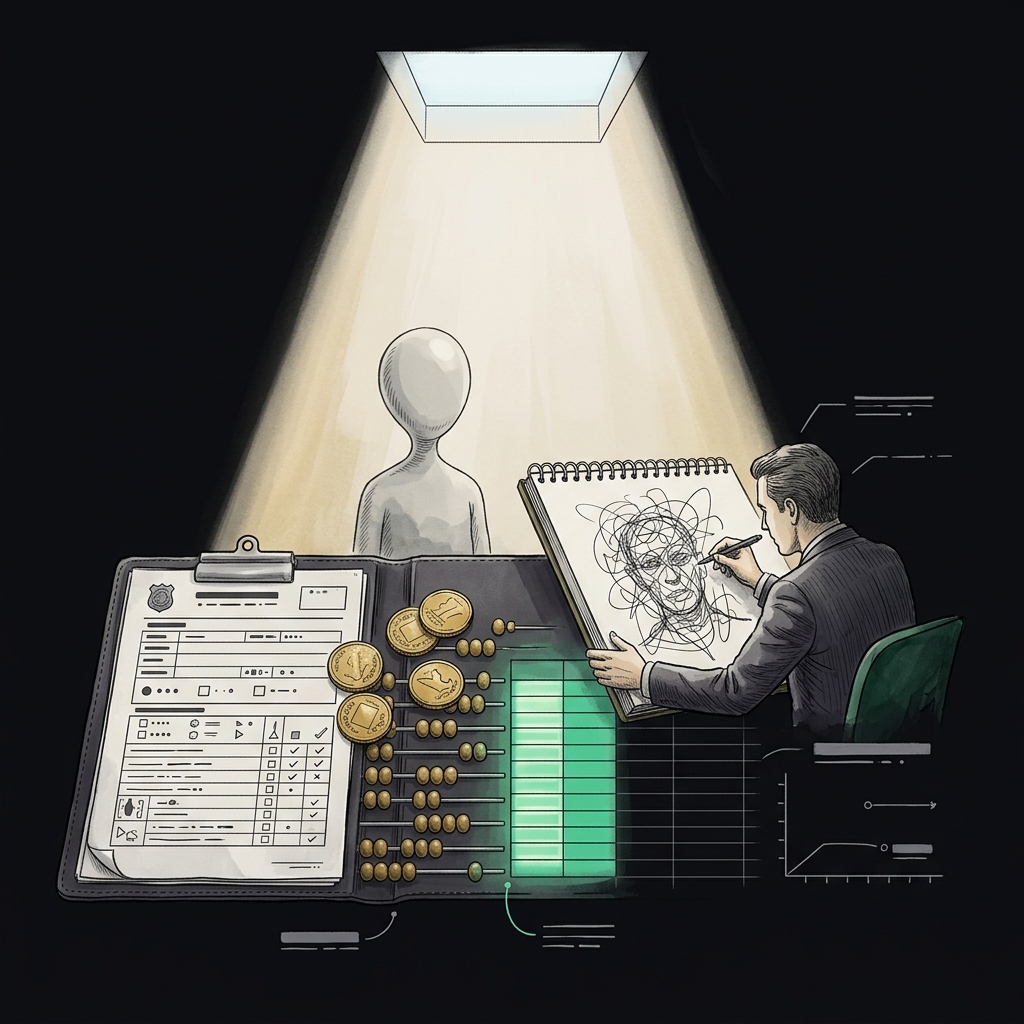
Consulting proposal discovery call notes are the structured record of what a prospect actually said during a scoping conversation — the pain, the numbers, the decision makers, the constraints, and the words they used to describe all of it. Skip this step, or capture it sloppily, and your proposal becomes a guessing game built on assumptions rather than evidence. According to Consulting Success's 2025 survey of the profession, nearly 70% of consultants win fewer than 60% of the proposals they submit — and the single biggest lever they name for closing that gap is the quality of the discovery conversation, not the pretty deck that follows it.
If you are a solo consultant, boutique firm, or partner at a larger practice, the discovery call notes template you use — or don't use — is quietly determining your win rate, your realized margin, and how many nights and weekends you'll spend re-scoping engagements that were never properly defined in the first place.
Why Consulting Proposal Discovery Call Notes Are a Profitability Lever, Not a Formality
The Project Management Institute's Pulse of the Profession research has consistently found that 52% of projects experience scope creep, and that scope creep drives an average budget overrun of 27%. In consulting engagements, where labor is 80%+ of your cost, that 27% overrun comes directly out of your margin. Scope creep almost never begins at the deliverable stage. It begins at the intake stage — with an incomplete, undocumented, or memory-based discovery.
David A. Fields, who has advised solo and boutique consultants for two decades, puts it bluntly: your best defense against scope creep occurs before you submit your proposal. The Harvard Program on Negotiation echoes the point — the first line of defense against scope creep is being crystal clear from the start about what is included and what is not, and that clarity is only possible when the discovery call was structured, complete, and written down.
Loopio's 2025 RFP benchmarking data pegs the average B2B RFP win rate at 45%, up from 43% in 2024. The firms consistently above 60% share a common trait: a repeatable discovery process that captures the same fields, in the same order, on every single call — so that proposals are assembled from evidence, not from a partner's memory of "what I think they said last Tuesday."
Takeaway: Treat your discovery call notes as a financial control document, not administrative overhead. A one-page structured note saves you 27% of the engagement margin the average firm gives back to scope creep.
The Seven Fields Every Discovery Call Note Must Capture
A useful discovery notes template is not a transcript. Transcripts are lossy — they capture words but not structure. What you need is a fixed set of fields that force you to hear the seven things a proposal writer needs. Every consulting proposal discovery call notes template we recommend covers the following, in this order:
- Trigger event. What happened in the last 90 days that made them pick up the phone? A missed board number, a churned key hire, a failed system implementation, an activist letter, a Sarbanes-Oxley finding. If there is no trigger, there is no urgency, and the proposal will sit.
- Current-state metric. The specific number they are unhappy with — churn at 14%, DSO at 71 days, gross margin at 38%, EBITDA down 340 bps year-over-year. Capture the number and the source system.
- Desired-state metric. Where they want the number to land, and by when. "Get DSO under 50 days by Q3 close."
- Constraints. Budget range, timeline, headcount available, systems they will and won't touch, regulatory limits, existing vendor relationships.
- Decision process. Who signs, who influences, who blocks, who else is bidding, what the procurement path is (direct award, competitive RFP, preferred vendor list).
- Success definition. What has to be true 6 months after the engagement ends for them to say it worked — and to give you a case study or a reference.
- Their exact language. The verbatim phrases they use for the problem. This is the single most-neglected field. Gong's conversation intelligence research on tens of thousands of B2B sales calls has shown that mirroring a buyer's own language in the proposal materially lifts close rates. If they say "revenue leakage," don't write "billing accuracy" — write revenue leakage.
Takeaway: If your notes are missing any of these seven fields at the end of the call, book a follow-up before writing a single line of the proposal. The follow-up call is free. The lost engagement, or the scope-creep loss on a mispriced one, is not.
The Discovery Question Framework: SPIN, Adapted for Consulting Scoping
Neil Rackham's SPIN framework — Situation, Problem, Implication, Need-Payoff — was built from 12 years of Huthwaite research into 35,000 sales calls and remains the most-validated question structure in B2B. For consulting discovery, adapt it as follows, running roughly 15–25 minutes per section for a 90-minute discovery:
- Situation questions establish the operating context: revenue, team size, geographic footprint, existing tech stack, prior consulting engagements. Keep these short — they are for calibration, not diagnosis.
- Problem questions surface the actual pain: "Where in the quote-to-cash process do deals stall?" "Which of your five business units is dragging the consolidated margin down?" These are where the seven note fields above start getting filled in.
- Implication questions quantify the cost of inaction: "If DSO stays at 71 days through year-end, what does that do to your revolver draw?" "If churn holds at 14%, when does the LTV/CAC ratio break?" Implication questions are where discovery calls stop being conversations and start being proposals in disguise.
- Need-Payoff questions get the prospect to describe the value of a fix in their own words: "If we brought DSO to 55, what would that free up on the balance sheet?" These lines end up quoted verbatim in the executive summary of your proposal.
Consulting Success's benchmarking of high-win-rate consultants shows top performers lead thorough needs discoveries 58% more often than average performers. The mechanism is straightforward: SPIN-structured discovery gives the prospect a chance to build the business case for hiring you, out loud, on the call. You capture it in your notes and mirror it back in the proposal.
Takeaway: Print SPIN as a physical cheat sheet next to your discovery call notes template. Any question that doesn't map to one of the four categories is either small talk or improvisation — both of which cost you evidence you'll need at proposal time.
A Step-by-Step Discovery Call Workflow
Here is the exact workflow a well-run boutique consulting practice uses on every scoping call. Adapt the timing to your average deal size, but keep the sequence:
- Pre-call research (30 minutes). Read the last two years of 10-Ks or investor letters if public, the LinkedIn profiles of everyone on the invite, any press coverage of the trigger event, and the competitor set. Enter the call knowing what you think their top-three problems are — then be prepared to be wrong.
- Opening (5 minutes). State the agenda, ask permission to record or to take detailed notes, and confirm who else on their side should see the follow-up.
- Situation and Problem (25 minutes). Use SPIN's first two categories. Populate fields 1, 2, and 3 of the notes template.
- Implication and Need-Payoff (25 minutes). Quantify. Push on numbers. Get their exact language for the payoff.
- Constraints and process (20 minutes). Budget, timeline, decision path, competing bidders. Populate fields 4 and 5. If they will not name a budget range, offer three brackets ("Are we in a $50–100K engagement, a $150–300K engagement, or a $500K+ engagement?") and read their reaction.
- Close (15 minutes). Restate what you heard. Confirm success definition. Set the proposal delivery date and the proposal review meeting on the same call, on the calendar, before you hang up.
- Post-call, same day. Fill in the seven-field notes template while the call is fresh. Send a written recap email within 24 hours quoting their language back to them. If they push back on anything in the recap, you've caught a misalignment before it becomes a signed engagement.
Takeaway: The 24-hour recap email is the highest-leverage step in the whole workflow. It converts your notes into a document the client has now implicitly ratified, which becomes the source of truth if scope disputes arise mid-engagement.
Common Failure Modes and How the Notes Template Prevents Each
Below are the five most common ways discovery goes sideways in consulting engagements, and the specific field in the notes template that catches each one before it costs you money:
- "We thought we were solving X but the client wanted Y." Caught by the Trigger Event and Success Definition fields. If those two don't line up, you are solving the wrong problem.
- "They said budget wasn't an issue." Caught by the Constraints field. "Budget isn't an issue" is never a real answer — force a range or three brackets on the call.
- "The economic buyer never showed up to the meetings." Caught by the Decision Process field. If you cannot name the signer by the end of the discovery call, the engagement is at risk before it starts.
- "Scope kept expanding." Caught by the explicit "Out of Scope" section written into the proposal from Constraints. Reworks's guidance on statement-of-work discipline is unambiguous: what you exclude in writing is what protects your margin.
- "They picked the other firm even though our deck was better." Caught by capturing Their Exact Language. The firm that mirrored the prospect's own words back to them won; the firm that translated the problem into its own vocabulary lost.
Takeaway: Every field in a well-designed discovery notes template is there because someone lost a deal or a margin point by skipping it. Treat the template as institutional memory, not paperwork.
From Notes to Proposal: The Handoff That Wins
A well-captured discovery note should let a proposal writer who was not on the call assemble a first draft in under two hours. That is the test. If your notes cannot pass to a colleague and produce a competent draft, they are notes for you, not for the firm — and they will not scale as you grow.
The best-performing consulting practices we've studied enforce three rules on the handoff:
- The proposal's executive summary is written using the client's Trigger Event, Current-State Metric, and Desired-State Metric — verbatim from the notes.
- The scope section is built by listing what is in scope, then explicitly listing what is out of scope, using the Constraints field.
- The price is anchored to the Need-Payoff quote. If the client said the fix is worth $4M in freed working capital, a $250K engagement priced against that value quote is a much easier close than the same $250K priced against your hours.
Consulting is a business where the difference between a 30% win rate and a 60% win rate is not talent — it is process. Discovery call notes are the least glamorous piece of that process and, dollar for dollar, the highest-return one. A structured, seven-field template used on every call, combined with a 24-hour recap and a proposal that mirrors the client's own language, is what separates the boutiques that grow from the ones that stall. If you don't already have a discovery notes template, using a proven one — with the fields, the SPIN prompts, the recap email, and the proposal handoff already built in — will pay for itself on your next engagement, and every one after it.
Sources
- Consulting Success, 54 Consulting Statistics For 2025
- Consulting Success, Consulting Proposal Template and Tips For Winning More (2025)
- Loopio, 38 Statistics on RFP Win Rates & Proposal Management (2025)
- David A. Fields Consulting Group, How to Combat Scope Creep While Delighting Your Consulting Clients
- Harvard Program on Negotiation, How to Defend Against Scope Creep at the Negotiation Table
- StrategyU, The Ultimate Guide To Scoping: How Consultants Define Problems
- Rework, Scope Definition & Statement of Work: Creating Clear Boundaries
- Gong, Conversation Intelligence research on B2B sales patterns
Related: Browse all Consulting Templates on ModelStack.
Get started with a free template
Download our free Unit Economics Calculator — no signup required.